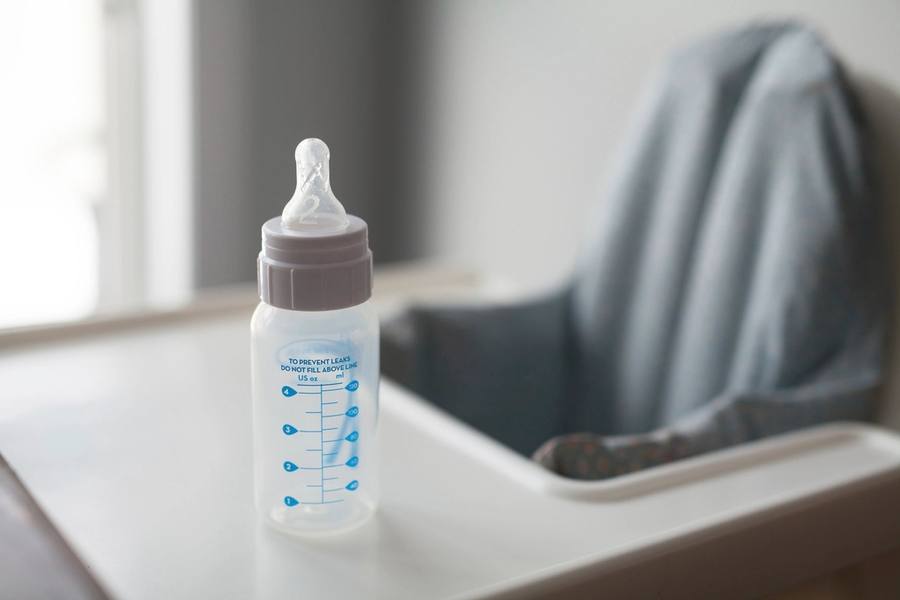
Dr Brown's Options+ Anti-Colic Baby Bottles

Temsili görsel (stok fotoğraf); ürünün kendisi değildir.
The Vent System And What It Does
The defining feature is an internal tube that runs from the teat to the back of the bottle, venting air to the rear rather than allowing it to bubble through the milk. The stated aim is that the baby swallows less air while feeding.
For babies who struggle with wind, reflux or colic-like symptoms, many parents report a real difference, and the mechanism is at least plausible. For babies who feed happily on any bottle, the system solves a problem they do not have.
The Options+ version allows the vent to be removed once it is no longer needed, at which point the bottle behaves as a conventional one. That is a sensible acknowledgement that the system is a solution to a phase rather than a permanent requirement.
The Washing Reality
A vented bottle has more parts: the bottle, the teat, the collar, the cap, the vent tube and the vent insert. Every feed multiplies that by the number of bottles used, and the parts are small and fiddly.
A dedicated brush set is effectively required, and many families end up with a drying rack purely for bottle components. Anyone considering these should factor in the washing load honestly, because it is the most common complaint by a wide margin.
They are dishwasher safe on the top rack, which helps considerably, though small parts still need care to avoid losing them.
Flow Rates And Fit
Teats come in several flow rates and matching the rate to the baby matters more than most parents realise. Too slow and the baby tires and becomes frustrated; too fast and they gulp, which reintroduces exactly the air the system is designed to avoid.
Flow rate should be increased as the baby grows, and struggling with feeds is often a flow rate problem rather than a bottle problem.
The bottles come in two sizes, and the smaller is genuinely useful in the early weeks when feeds are small and a large bottle is unwieldy.
Against The Alternatives
Against conventional bottles such as the Philips Avent Natural, these have more parts and more claimed benefit for windy babies. If a baby feeds comfortably on a simple bottle, the simpler bottle is better.
Against other anti-colic designs, the internal tube is the most thorough approach and also the most washing.
Against exclusive breastfeeding, bottles are a supplement or alternative rather than a competitor, and many babies use both.
Who Should Not Buy It
Anyone whose baby feeds comfortably on a standard bottle is adding washing for no benefit.
Anyone without a dishwasher should think carefully about the number of small parts, since hand-washing them several times a day is a genuine chore.
Anyone struggling with feeds should check the teat flow rate before concluding that the bottle is wrong.
The Verdict
A well-designed anti-colic bottle with a mechanism that many parents of windy babies find genuinely effective, and a vent that can be removed once outgrown.
The washing load is real and it is the main reason people switch away.
Buy them if your baby struggles with wind; buy simpler bottles if they do not.
Bir bakışta
Artılar
- Internal vent genuinely reduces air bubbling through the milk
- Vent can be removed once no longer needed
- Several teat flow rates and two bottle sizes
- Dishwasher safe on the top rack
Eksiler
- Many small parts to wash after every feed
- Dedicated brush set effectively required
- No benefit for babies who feed comfortably anyway
- Small parts are easy to lose
Sıkça sorulan sorular
Do the anti-colic bottles actually work?
For babies who struggle with wind or reflux symptoms, many parents report a clear improvement and the mechanism is plausible. For a baby who feeds comfortably on any bottle, there is nothing to improve and you are simply washing more parts.
How much extra washing is it really?
Five to six parts per bottle rather than three, several times a day. A dishwasher makes it manageable; hand-washing makes it a genuine chore, and it is the most common reason families switch to simpler bottles.
My baby is struggling — is the bottle wrong?
Check the teat flow rate first. Too slow tires the baby and too fast makes them gulp, and both look like a bottle problem. Flow rate should increase as the baby grows and is the most commonly overlooked variable.
Teknik Özellikler
| Type | Vented anti-colic bottle |
| Vent | Internal tube, removable |
| Parts per bottle | Five to six |
| Teat flow rates | Several |
| Sizes | Two |
| Dishwasher | Top rack safe |
| Brush set | Effectively required |
| Best for | Babies with wind or reflux symptoms |
Özet
A genuinely effective anti-colic design with a removable vent, and a real washing load. Right for a windy baby; unnecessary work for one who feeds happily.
Amazon'da Fiyatı Kontrol Et